Showing posts with label windows mobile. Show all posts

26 May 2010

A (re-)look at the Samsung SGH-i600

I realise that I am in the fortunate position of owning both an HTC HD2 and a Toshiba TG01, two super specc'd and very speedy Windows Mobile smart phones. More on the Tosh later, as I have now upgraded to 6.5.x and it is working beautifully as my portable media player, synchronizing beautifully with my Windows media centre.

Until last week, the HD2 was my actual phone, but, much as I like it, there are a few things which I would prefer to see in it. The first is a longer battery life - with Exchange and Twitter running you are lucky to get through 12 hours of use before a recharge. The second is that, much as I like Swype, the on-screen software inpout panels (SIPs) are much more effective on a resistive screen, and I prefer a harware keyboard anyway. The third is that the HD2, even though it is all screen, is still pretty massive.

I am also someone who is fortunate enough to have 2 SIM cards: one for voice and texts (with minimal data) and one for data alone. So, what was the best way to optimize my devices? Well, it would make sense for me to put the data SIM into the HD2 because with internet connection sharing and the marvellous WiFi router, it would be the easiest for using that connection. I also like that I can take it with me and have its serve independently as a mobile internet device (do people still use the term "MID"?).

The Tosh is still my home browsing device, so that meant I needed a new phone, preferably one with a hardware keyboard, WiFi, HSDPA and also pretty cheap. That's where the Samsung SGH-i600 came in. I manage to snag one on eBay for just under £40. It came announced as SIM-locked to O2, but O2 doesn't really lock their handsets so both the 3 and the Orange SIMs work in it. After doing the basic tests to make sure everything was operational I flashed it from Windows Mobile 5.0 to Windows Mobile 6.1. This is not a particularly difficult procress but definitely requires Windows XP (not Vista or 7) and involves a particular sequence of ROM flashes to allow the progression to higher versions of the OS. Now it has the lovely sliding panels interface and all.

Key programs I've loaded on board in no particular order:

  • twikini

  • total commander

  • facebook

  • windows live

  • marketplace

  • bing

  • google maps

  • keep recordin'

  • live mesh

  • myphone

  • opera mini 5 beta

  • smart piano

  • tcpmp

  • tempoperfect

  • weather watcher

  • wm wifi router


Overall I am pretty pleased with the result. The phone serves mainly as a social networking hub and with push email, twitter (via twikini) and facebook all of my bases are covered. This being an older phone the internet connection is HSDPA version 1, but it is fast enough even for browsing using Opera mini.

One thing I will say is that the normal battery is definitely not enough. You will need to use the extended battery if you want to use any kind of connectivity. Thankfully the phone came with a jewel box shaped charger so you are never without an extra. One work of caution though, for reasons entirely incomprehensible to me, Samsung have cables which either charge your phone, or synchronize it, but not both. So you cannot charge the phone with the USB cable that comes with the phone and must use the included wall plug. For people like me who use a single wall wart USB adapter then plug the variety of USB cables in to allow charging of all the different electrical gizmos this is singularly annoying!

My other criticism is that the processor isn't all that quick (certainly conmpared to the two snapdragon devices), so if you are contemplating watching videos encoded in the native QVGA resolition, then you will ve disappointed. Instead, I reencode everything using Windows Media Encoder into the Pocket PC 220x176 profile. This keeps a decent framerate and image quality, with a small file size.

Overall, I'm pretty happy with this arrangeent; my conclusion is that nothing can beat a hardware keyboard at the end of the day!

26 March 2010

Replacing the N800

For a device which, for the better part of 18 months was my main way of accessing and listening or watching podcasts, I blogged very little about the Nokia N800. Sadly, with the arrival of the Toshiba TG01, I decided that it was time for it to find a new home, and it has, courtesy of eBay, flown the coop.

Of course, this means that the TG01 had to be repurposed to this role. But could it live up to the standards of the N800? Well the answer is both a 'yes' and a 'no'. First of all, the TG01 just doesn't have anywhere near the same kinds of speakers of the N800. I don't mind the loss of stereo sound, but I do mind that the Toshiba can't really crank up the volume enough. I don't need it to be too loud, just loud enough to overcome the sound of frying something in the kitchen or splashing about in the tub. The TG01 can't quite achieve this. The other major issue is the lack of a built in stand. I looked on line for a case which has this as part of the design, but they were nowhere to be found. Instead I have taken to using a bit of blutack to stick the stand which came with the TG01, a weird 3-way folding contraption, to the back of the phone. It works but is hardly cosmetic. I guess the best thing is that it works in both landscape and portrait where the N800 could not.

So, what do I use now as my pod catcher? Well, the one I have settled on is BeyondPod, which has two great features. The first is automatic seeking and downloading of podcasts. This means I never have to check manually and all the latest material is there for me to watch when I want. It also has a great automatic delete function, which I have set to remove podcats older than three weeks. This is essential as I have an 8GB card in there which is surprisingly little capacity. I am still sticking to downloading the versions of the podcasts formatted for the PSP as the resolution is fine, but some shows just don't come compressed that way, such as the Engadget Show. There was some trepidation the first time I played this on the TG01 - would the Snapdragon processor hold up? - but it all seems to run fine at the encoded frame rate. Of course the file is totally massive, and, for my purposes, unnecessarily so.

The other amazing program is myPlayer, a great riff on the BBC iPlayer, but which supports most of the U.K.'s on-line TV channels as well as the one from the Beeb. Now, in this case the resolution does matter, as what comes through is blocky and pixelated, and now and then there are limitations to the speed at which it streams. This can lead to the odd glitch in playback.

Finally, the Snapdragon processor really comes into its own when myPlayer is combined with my pair of bluetooth speakers. I have, in the past used an HTC Magician to try to stream audio, and this worked fairly well. The N800 does not have the BT audio profile so could not connect to the external speakers. But the TG01 handles the combined streaming of video into the device via Wifi, decoding and displaying the image on the screen, and transmitting the audio out via bluetooth to the speakers without a hitch. Amazing! To a certain extent it also mitigates the disadvantage of the poor built-in speakers.

10 February 2010

Pimping your Windows Mobile 6.1

Let's face it, we all like something new and shiny, but very often it isn't the hardware which is stale, it is the software. After all, once you have a high-res colour screen, a keyboard, every connectivity option under the sun including GPS and WiFi running on a decent processor, do you really need anything more? If you are a geek like me, the answer is always 'yes', but at least the hunger (and the expense) can be delayed by tweaking your device. This is especially true if you have a phone by a company which has not been blessed with the benevolent hackitude that is xda-developers, so an automatic Windows Mobile OS upgrade is not always available. In such a situation, what is a geek to do? The good news is that even if you are stuck on Windows Mobile 6.1, there is quite a bit you can do to make it friendlier for your fingers, and add a little visual "wow!" And all for free too! Here's my handy guide to how I've pimped out my i-mate Ultimate 9502.

Update the boring today screen with TouchFlo
Officially, TouchFlo only runs on HTC devices. Indeed, many of TouchFlo's tabs are hooked into HTC-specific programs, registry keys and dlls. Unofficially, however, you can get most of the features up and running without too much bother. In that respect TF2D is easier to get going than TF3D. Pijulius over on xda-developers has worked hard to port the graphics from QVGA (which is the screen resolution it works on natively) so that TouchFlo 2D runs on VGA screens. I have tweaked my own installation a bit by commenting out the tabs which don't work in the home.xml file and also tweaked some of the images so that the clock and buttons more closely resemble the most current iterations of HTC Sense. The main advantage is you get finger friendly buttons and a slick graphical interface which will keep even the most jaded geek happy for a little longer.

Add finger scrolling and finger-friendly menus
Of course, the finger friendliness should not be limited to the homescreen only. Ideally it should extend all the way through the UI. There is no escaping that Windows Mobile was designed for stylus use; I have no complaints about this, but if you really want to use your fingers on those occasions when strecthing to the silo just won't do, then this can also be achieved. In fact, this involves three programs. The first is FTouchFlo by Efrost which gives you a semblance of finger friendly scrolling, so you don't have to use the scroll bars. This is paired with Schaps' FTouchFlo Configuration Tool which lets you even more finely tweak some of the settings. Finally, to replace Windows Mobile 6.1's default tiny menus, you should use Francarl's FingerSuite. Although this looks like HTC's current default menus it in fact predated HTC's implementation. Works just as well!

Intercept the start menu and change the background
One of the new features of Windows Mobile 6.5 is that when you click on the start menu flag you don't get that tiny drop down menu any more. Instead it takes you to that hexagonal grid of all your programs. You can emulate this to a certain degree in Windows Mobile 6.1 by using a program called Start Launcher by Bartwell. What this does is intercept a click on the start button so that it will run any other program. To get it to take you directly to the programs folder, just configure a 'tap' to direct to /windows/folderview.exe. My top tip is to leave 'tap and hold' activating the old menu so you can easily get to settings. While you're there, if you are bored of the horrid white background of the programs folder, then you can change this too. I'm using grey, but really, almost any colour can be used. Just install UI Tweaker. Oh, and you may have noticed how my taskbar and soft keys are flat black? Well, that's because I'm using the HTC Black theme taken from my own HTC Touch Diamond.

Change the keyboard
There is no denying that the built in keyboard for Windows Mobile 6.1 sucks big time if you want to use your fingers. Thankfully you can always install an alternative software input panel (SIP). The ones I like and use are the Finger Touch keyboard by Teksoft and the Swype keyboard. I hesitate to recommend the latter as it seems to have been literally 'swiped' off the Omnia II ROM. In terms of function, however, I have to say that it works perfectly on resistive touchscreens. Both come with a range of alternative keyboards to suit every type of finger (or thumb) and both can be skinned as well, so you can integrate them right into whatever theme you have chosen for your device.


Beautify your SMS
This tweak falls into the not-absolutely-necessary-but-it-looks-pretty category. Since Windows mobile 6.1 we have had threaded SMSes. If you are one of those people who would prefer the display to look more like a series of speech bubbles then Astronaut's work in Skin SMS will be right up your alley. The power of the community means that all sorts of skins are now available, from the more staid versions like those from HTC Messaging and the iPhone to rather more florid user-generated variants. You are sure to find a skin which suits you.

27 January 2010

Getting a "sense" of the Toshiba TG01

As you may have gathered, my phone was upgraded, and I am now in posession of a Toshiba TG01. The shocking thing is that this phone is, for whatever reason, not very popular on Orange, and they are in the process of getting rid of them. I was amazed that they gave it to me entirely for free (on a contract, albeit a low one); we are talking about a Windows Mobile 6.5 smart phone with a 4.1" WVGA screen and a Snapdragon processor humming along at 1GHz encased in one of the most gorgeous and thinnest shells I have ever seen. Bargain!

Naturally, hardware alone does not a good phone make, and software also plays a very big role. I did try using Toshiba's own stripe interface which wasn't really as bad as people make out, and Orange's customizations which I think are truly dreadful and ugly, as well as Titanium, the default Zune-like interface of WM6.5, but because I have been using the HTC Diamond for so long, I have gotten used to the default HTC interface. I think the Diamond was the first device to use TouchFlo 3D, and with time this has gradually been upgraded and is now called HTC Sense. In fact, my Diamond currently runs HTC Sense 2.1, so I was seriously missing the interface.

Well, the good news is that this being Windows Mobile, if you don't like the UI you can always change it, and one enterprising soul has created a Sense 2.1 cab installer. This runs very well on the TG01 as you might imagine, and is both fast and responsive. You do get all the amazing 3D weather animations which never cease to wow me. Here is a video I made of it in action.


Sadly there are a few tabs which don't really work fully. The first is the contacts tab which, while you are able to assign favourites, on my device and setup crashes when you click on "All Contacts" on the left soft key. Also, video doesn't appear in the pictures and videos tab, nor does the picture viewer open when you click on a photo. HTC Album (HTC's own photo viewer) doesn't seem to install properly on this device. Obviously, and link to an HTC proprietary program is non-functional either.
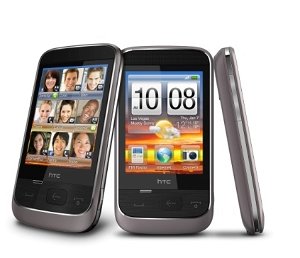
None of these are deal breakers for me, and I have to say it does make the transition from my HTC Diamond to the Toshiba TG01 that much easier. I know that many people are hesitant about using a non HTC phone because they will lose Sense (which explains why HTC is going after the low end with the HTC Smart to get you hooked on the UI). HTC Sense on the Toshiba TG01 serves as a bit of a reassurance to those who are thinking of taking on leap with this great deal of a phone.

15 January 2010

18 months

Wow. I can't believe it has been 18 months since I first received my HTC Touch Diamond. The only reason I know is that upgrade time has swung around again, and I have a new phone. In the last 18 months I have to say that the Diamond has been a real trooper: I have flashed the ROM at least a dozen times, each time falling in love with the interface all over again as something new is discovered.

The last 18 months have seen the unofficial releases of Windows Mobile 6.5, 6.5.1 and 6.5.3, all of which have run on my phone, as well as TouchFlo3D in its various incarnations right up to HTC Sense. Not all the new ROMs were that stable and some were downright buggy, but it was a risk I was willing to take. At the end of the day, the most stable ROM was one still based on 6.1: Gen.Y's really quite wonderful D2 R5 ROM which uses HTC Sense 2.1, and that is the one I've stuck with for the last few months.

So, now that the new phone has arrived, it begs the quesiton, what should I do with my trusty Diamond? I still love the phone because it is so small. Over time, however, the WiFi has ceased to work, which has proven to be quite a big problem as without the SIM it now has no independent connectivity apart from Bluetooth and GPS. Of course when synchronized it can use the PC's pass-through connection, but that is quite limiting. At the moment I have it set up as a 4GB mp3 player, but I am thinking of doing something a little more adventurous with it. Any suggestions?

10 December 2008

Fennec browser and Origami Experience running on Windows Mobile!

I apologise for the somewhat misleading title of this post, because, sadly, it is not true in the strictest sense of the word. However, at the same time it is not entirely false either. I get bored very easily by my devices, and rather than buy a whole new one every time I want a bit of eye candy, I try to explore different ways of trying out another user interface. UIs involving touch are the subject du jour, but neither are particularly new.

For instance, in Microsoft's initial, but now sadly dead, vision of the UMPC there was a UI designed to be finger friendly on relatively small screens. It was called Origami Experience. Sadly, Microsoft in their infinite wisdom decided that it could not be downloaded as a separate overlay of Windows XP. No, they wanted it to be exclusive to the new generation of UMPCs. Thankfully, an enterprising young woman called Neotechni decided to take matters into her own hands and came up with a clone called Mobile Home. She details it in the Origami Project forum.

I downloaded it, and it is indeed feature complete and runs beautifully, but having installed it, I can't make full use of the functionality as I do not have a touch screen desktop. That is where the magic of remote desktop on my HTC Universal comes in. By firing up a remote session, I can use the touch screen on my PDA to really try out the UI. So far I love it! It sure beats the traditional start button-cascading menu-task bar paradigm on such a small device.

Using the same technique I can actually get Fennec, Mozilla's new mobile browser, to run on my HTC Universal too. Fennec builds run on XP but not Windows Mobile at the moment, but by "putting it onto" my phone via RDP I can try it out is it is meant to be. I have to say that being an alpha build most of the functionality is sadly limited, but I do like the screen sliding paradigm of browing and tabs.

I have also used my old tablet Windows 98 Fujitsu LT in this way to try out both Mobile Home and Fennec, and have to say that there is a great novelty value in seeing an entirely different user interface on this prehistoric device.

One more top tip, if you are using Firefox, even remotely, on a touch screen device, then I strongly recommend the Grab and Drag add-on. It makes surfing the web that much easier.

Edit: I added a video of RDP in action on the HTC Universal showing Mobile Home, Firefox and Fennec.

09 December 2008

A review of the Creative Inspire T10i speakers

Quite a while ago I reappropriated my old HTC Magician as an internet radio. The set up was a bit convoluted, but worked quite well. in the interim, however, the phone was requisitioned by my parents and I went back to listening to my internet radio on the PC. I still think this is a bit of an overkill, and there is something vaguely annoying about having to boot up my desktop to listen to a bit of streaming Christmas music. Time to come up with another solution!

While I no longer have the phone, I still do have the SanDisk WiFi SD card and indeed the bluetooth speakers. The bluetooth connection was a bit wasted though, since the only PDA I have lying around at the moment is my old hp iPAQ h2210. This has bluetooth but does not support A2DP. In truth, the Acoutic Energies don't have the best sound anyway, with rather muddy basses and wooly highs. So I figured it was time to look for a new pair of speakers.

In the end I settled on a pair of Creative Inspire T10i speakers. I have had a really good experience with Creative's before and I know that in their price range their speakers really are unparalleled. I originally wanted to get one of the fancy X-Fi speakers since the music playing out of my PDA will have been digitally compressed. Most internet radio streams run at a feeble 96kbps I believe, and it would have been great to have some of that fleshed out using the X-Fi crystallizer system. I'm not going to argue the case for X-Fi, but suffice to say that response to it is a bit subjective - I love it for digital music.

Unfortunately, X-Fi systems come at a price premium and I didn't want to spend more than fifty quid on it. I found one review of the T10is on line and it was really positive, so I figured I would give them a shot. Even so, I was heading rather blindly into the purchase. I ended up spending just under £30 for the speakers on eBay and have to say that for the price the sound really is stunningly good.

The speakers themselves aren't particularly huge but they have a tweeter and a mid-sized cone, as well as a bass port exiting at the top. The right speaker has the volume and tone control knobs, and at the back a power and audio in port. This being the T10 'i' variant, it also came with a dock for an iPhone or iPod Touch - clearly this is something I do not need. As I mentioned, I am streaming internet radio through it at the moment, and the basses are rich and punchy with clean, crisp highs and rounded mids. The sound is really beyond what one would expect for speakers in this price range. Strongly recommended and well worth it: if only because I can now listen to O Come All ye Faithful without first hearing the Windows startup sound!

23 July 2008

A review of the HTC Touch Diamond

It has now been a week since I upgraded my phone to an HTC Touch Diamond. I’m on Orange and have been using its spiritual predecessor, the SPV M700 (HTC Trinity) for quite a while now, so this review is more to do with how the transition went. I’m very sceptical of upgrades because I realise that technology doesn't move all that quickly, and a new case does not a worthwhile upgrade make. Moreover, most of the time I suspect that the mobile phone operators are out to fleece you. This time was different though, because the iPhone 3G has just been released on O2, and it is a powerful bargaining chip with Orange.

Anyway, after speaking to customer retentions I negotiated an 18-month contract which includes 600 minutes of mobile/land line calls, unlimited text messages and 250MB of data, all for £30 a month. Crucially, it also gives me the unlimited home broadband deal (8Mbps ADSL and an Orangebox) for just £5 a month – a great overall saving which, to be truthful, keeps me loyal to them. I also got the HTC Touch Diamond (or as they call it, the ‘HTC Diamond’) for free. This compares well with other flagship phones which I would have had to pay for otherwise.

So what do I think of it after a week of use? Well, from the outside I must say that it is one of the most beautiful phones I have ever had. I really like the angular shape, the flush screen and the faceted back. It certainly compares favourably with my old HTC Trinity – with the leather case on the Diamond is actually still smaller than the Trinity! In fact it is significantly smaller than the iPhone and the N95 8GB, the much touted competitors of this phone. I can slip it into a pair of tight jeans without gouging myself in the groin.

Such minimalism does come with a few caveats though: the first is that there are much fewer hardware buttons on this phone. Although the traditional windows and OK button are missing, they have been replaced by the home and back keys. Significantly absent, however, are the voice command, recorder and camera buttons. The Trinity also had a fantastic scroll wheel and an extra OK button. I never normally use these buttons as they are designed but reassign them to launch specific programs. For instance, in my Trinity the camera button would launch the communications manager - really helpful for turning WiFi on and off.

There are no such hardware shortcuts in the Diamond, and all of these functions have to be launched instead through the touch screen interface. Although the touch wheel on the front of the device is capable of scrolling in certain programs, it is admittedly not as easy to use as the true wheel on the Trinity. Thankfully, the interface is a wonder to behold – TouchFlo 3D is easily the prettiest interface I have ever seen on any of my phones and combined with a VGA resolution (640x480) everything is in sharp technicolour. I was running Windows Mobile 6.1 with loads of interface tweaks on the Trinity, including the old TouchFlo as seen on the HTC Touch, and while it was a breakthrough at the time, this is so much better and it certainly has that wow factor, even after seven days of use. I get bored of interfaces after about a week, so it is doing well!

I notice that people have complained that the screen is unresponsive or sluggish, but I certainly have not found that to be the case at all. However, I must preface that with the confession that I am also one of those people who loves hacking the phone, and even before properly using my Diamond I had already downloaded and installed the tweaks available from xda-developers. This is not to be underestimated as a resource for optimizing and expanding your phone. The two key programs I installed are the TouchFlo 3D configurator and GSen, a program which enables the use of the accelerometer to rotate the screen.

Interestingly, Orange have decided to eschew any form of customization on the Diamond, and the only sign that it came from Orange is the very discreet logo on the battery case. In fact the Diamond thankfully includes a stock version of Windows Live Messenger, without the Orange (pay-for) customizations. Apart from the built-in apps I loaded on my usual set of must-have programs - Mobipocket, Vito Sound Explorer, TomTom 6, JB Piano, and 1-Calc Lite - as well as a half dozen or so games. I’ve also put Core Player on there for .avi video playback. I've also paired it with my ThinkOutside bluetooth keyboard. Everything works as it did on my Trinity, but seems speedier overall in terms of load times, and TomTom even gets a faster fix on the satellites from a cold boot (20s or so versus nearly 2 minutes on my Trinity).

I have also now set up my Google and Yahoo! email accounts so the phone pulls emails off the servers throughout the day. With web-browsing, RSS feed and weather updates as well, it is just as well that I a lot of data is included in my package! One thing I will add though, is that I have turned off 3G most of the time as it is a real battery sapper, the second major caveat of having such a small size and therefore a small battery. With 2G most of the time, apart from 3G for the odd bit of browsing, I am averaging 16-18 hours of battery life each day. Not great, but also not bad for such a tiny device.

In the end I am surprisingly happy with the HTC Touch Diamond. Many reviewers compare it with the iPhone 3G and the N95 8GB, but both of the latter two devices are more expensive and far larger than the Touch Diamond. In the end, in terms of actual useability, portability, functionality and value for money, I do think the HTC Touch Diamond is a winner!

27 June 2007

A pox on thee!

I have succumbed to the upgrade bug, but I must admit only partially. As a fan of handheld PCs, I have been looking out for a reasonably cheap HTC Universal for a while. Considering that these juggernauts used to cost an arm and a leg, it is amazing how far prices have fallen in the last 18 months since they came out. That said, they are still pretty cool devices - full keyboard, VGA screen. Most importantly though, there is a huge community out there dedicated to hacking the device, and several builds of Windows Mobile 6 are available.

Anyway, the way I see it, my h4350 is a great device for Skype, but it is always running out of memory and cannot run Skype, Messenger and Pocket Internet Explorer at the same time. Another annoyance was that the browsing experience on a QVGA screen is very limited.

So, when I received the HTC Universal, I flashed it with Midget's Windows Mobile 6 ROM (version 7 I think), then set about loading on the replacement programs - Skype, Opera Mini, and Deepfish browser. My early impressions are that the browsing experience, even using PIE is infinitely better, especially in high resolution mode, and the new Messenger with it's voice clip feature is pretty stunning. Skype also runs beautifully and looks great.

All in all I think it was a justifiable purchase, but now I need to find a role for the old iPAQ.

16 June 2007

A solution to the internet radio question

Well, it has been a while since I blogged anything, but I have been pretty busy. Since the last post I inherited a Qtek S110 a.k.a. HTC Magician from a friend who had bought it solely for the purpose of playing bubble breaker. Anyway, she lost interest after a while and I was the glad recipient of her cast off.

This obviously set me thinking about how to best use what is essentially a Pocket PC as a dedicated internet radio device. I already had the SanDisk WiFi SD card, so it was simply a question of putting it all together. Here is my recipe!

Take one HTC Magician and upgrade the ROM to the latest 1.13 WWE version. Then run the cab file to upgrade the bluetooth on your device. This enables the A2DP profile which will allow the HTC Magician to connect to a set of bluetooth speakers. I'm using a pair of Orange Acoustic Energy bluetooth speakers which currently costs under £40 from Orange. After that all you need to do is install the SD WiFi card and GSPlayer which allows you to play internet radio streams.

Voila! Internet radio is streamed via WiFi to the Pocket PC, and then via bluetooth from the Pocket PC to a pair of external speakers. The icing on the cake is that the HTC Magician is so small it is like a remote control, and you can carry it around the room to switch channels at will. Who needs a Sideshow remote when you have a Pocket PC eh?

07 March 2007

A dedicated Skype phone

After a few fits and starts, Phillips will finally be making their VOIP841 available to buy in Europe and presumeably the rest of the world. Their tagline is that it is the "world's first PC-Free Skype-certified phone", meaning that unlike most other dedicated Skype handsets out there, the computer does not have to be on to make or receive calls.

If this doesn't sound revolutionary, it really isn't. Ever since Skype became available as a Pocket PC application, people have been creating their own special VOIP phones. The ingredients are simple: all you need is a WiFi enabled Pocket PC capable of running Skype and a WiFi connection (of course).

My setup uses my multifunctional and ubiquitous iPAQ h4350. It has built-in WiFi which means that even when the computer is off, it can quite happily connect to my wireless access point. The biggest problem was in trying to find the version of Skype most suited to it. The download page is rather unintuitively arranged according to brand, and something as prehistoric as the h4350 is clearly not listed in the HP section.

In the past there used to be two versions of Skype, one optimized for low CPU devices and one for high CPU ones. I'm not sure that distinction still applies, so for the sake of consistency I went with the Dopod 700 download since it at least runs Windows Mobile 2003. Once it is installed, you just need to log in and you you are ready to go.

I leave my Pocket PC logged-in all the time. It sits next to my regular phone and rings when someone tries to call me, and because is PC independent. It really is like a dedicated Skype phone. What is using it actually like? Well, as with all Skype calls, your mileage does vary according to the quality of your connection. That said, with echo reduction on, the sound quality is perfect for speech.

In terms of hardware, the h4350 is not really set up to be a phone. The microphone, for one, is at the top, while the speaker is located below. I use it as you would a speaker phone, but if you want a little more privacy then it would be a good idea to invest in a headset. It also takes a while to get over the thin-but-wide feel of the PDA.

WiFi enabled Pocket PCs can be had for much less than the Phillips VOIP841, and you get a load of extra functionality too!

01 March 2007

An iPhone super skin

Interface is, allegedly, king. At least that is what technology seems to be pushing at the moment. Windows Vista, Mac OSX and Linux/Compiz/Beryl all seem to be emphasizing looks, and hopefully usability, on the desktop.

In the mobile phone space this has hardly been ignored, but the sheer number of different platforms means that there is no unity of interface across them. I used to use a Nokia phone for instance, and was really reluctant to leave the Series 40 interface because all other interfaces were unfamiliar to me. The more cynical will suspect that manufacturers are doing a Microsoft (or an Apple for that matter), that is, making people so used to one interface that they are reluctant to switch to something different.

Currently, I am on my second Windows Mobile device, a Ubiquio 501 running Pocket PC phone edition. My previous Windows Mobile phone was a Motorola MPx200 running Smartphone edition(s) (see previous post), but even though the two platforms share a name, there was still a learning curve in the move between the two.

The iPhone interface, of course, has the web in a bit of a tizzy, and even I have created an iPhone skin. However, the chap in this video has taken it even further and gone as far as programming an iPhone-looky-likey screen lock and the flick-scroll interface for his Eten M600, another Pocket PC phone. I don't find either of those UI ideas particularly useful, but you have to admire the dedication and skill, and to a lesser degree the obsessiveness of the guy.


I also have a Samsung D830 which runs an Adobe-designed flash-based interface. This is pretty and works well. What I found most interesting though, is that Samsung have decided to copy their own interface, allowing it to run on Windows Mobile, and created a launcher for the new Samsung i718. While this is undoubtedly because they want to keep the user experience consistent whatever the platform, at the same time I can't help suspecting that no-one was going to rush out and slavishly copy the Samsung interface any time soon.

The real moral of this story? Interfaces come and go, what's fashionable now, may be unfashionable in a year. Go for hardware which is durable, and for software you can customize. You'll win every time!

Edit: Oops, it looks like Apple's aggressive legal team have forced YouTube to remove the video. However, you can download it here.

22 February 2007

Movin' on up

In my view, one of the best smartphones to ever have come out is the Motorola MPx200. This was one of the earliest, and possibly the first, clamshell smartphones. Sure it didn't have a camera, bluetooth or WiFi, but it was durable, functional and fairly good looking.

The real magic, however, lay in the possibility of upgrading the operating system. The MPx200 was initially released with Windows Smartphone 2002 on it. Before long though, a ROM was leaked which allowed you to upgrade the entire operating system to Windows Mobile 2003 Smartphone. And then more recently, it was possible to take it even further to Windows Mobile 5 Smartphone. Until last week this was the most up to date operating system available on any Windows phone.

Now of course, Windows Mobile 6 is out. You have to wonder whether an upgrade will be available for this still fully functional 5-year old phone.

Unfortunately, one of the main sites for cooking up these ROMs is being shut down by Microsoft. I can see why, but the fact that the software is upgradeable is what drew me to the hardware to begin with. So it appears to be a case of cutting off their nose to spite their face.

Sad times indeed.

There's life in her yet


The PDA is dead. At least that's what Slashdot tells me. Again, and again, and again. Indeed, my second ever PDA, an iPAQ h2210 I bought 4 years ago when it came out, briefly suffered a case of neglect and was placed on ice for a while, supplanted by a newer and equally capable convergent mobile phone.

Yet it has recently come to life, and in fact, is much more useful now than it has ever been. I no longer use it for PIM and Office functions, but because you can install programs onto it, it has taken on a new role. Here is the software which resuscitated my PDA.

If there is a single piece of software which brought the Pocket PC back to life, it is PDAWin's TV Remote. I normally have four different remote controls, but with this program, I can transform my Pocket PC into a universal remote. Note that not all PDAs have a sufficiently powerful infrared transmitter to reach from your sofa to the TV set; thankfully the h2210 is one of them. This program is worth every cent I paid and has given the PDA a new lease of life.

The next program is OmegaOne's 1-calc Lite. Windows Pocket PC 2003 comes with a built-in calculator which is both ugly and rudimentary. Thankfully Microsoft provide this calculator from their website for free. It includes a unit converter and a tip calculator with large glossy buttons, making it really useful.

Another program which has given my PDA a new role is Pocket GBA. Are you someone who plays games on your Pocket PC? Well, I never used to either, the extent being the odd attempt at Jawbreaker or Solitaire. Part of the reason was the lack of good games. With Pocket GBA though, the entire universe of Game Boy Advance games is available. Now I can get my Mario, Zelda or Donkey Kong fix on the PDA. Where you get the ROMs though, is another question!

The last program which I find useful is JB Piano, another freeware utility which turns your PDA into a virtual piano. I'm in a choir, and while I am not tone deaf, I do find it hard to look at a note and pitch it perfectly off the top of my head. JB Piano solves this problem by producing the note I'm looking for pitch perfect from the PDA speaker. I use it all the time when rehearsing and find it really invaluable.

So there we have it - an outdated PDA which was briefly retired, but has been resurrected and is now more functional than ever!

The inevitable iPhone-y post


The post is inevitable because the current king of shiny gadgets which must be resisted has got to be the Apple iPhone, and it is not even on sale yet!

I am not going to argue about whether any of the technologies presented in the iPhone are particularly groundbreaking, but I do want to say that I am not all that impressed. I do appreciate the interface which has prompted all sorts of copycat skins from Blackberries to Treos. The one which has drawn the most ire from Apple, however, is, understandably, the skins for Windows Pocket PC devices.

Now, I have an old iPAQ h4350 which runs Pocket PC 2003 first edition. Normally it stays connected to the internet via WiFi, and it runs Skype. With good noise cancellation and a decent microphone, this does as well as most dedicated Skype phones. The h4350, however, also has a built-in QWERTY keyboard which makes it ideal for instant messaging with Skype and MSN messenger, so in that sense it is already more versatile.

Because you can customise the interface as much as you like with a Pocket PC, I decided to create an iPhone skin. I made my own, but these are readily available all over the internet, much to Apple's annoyance no doubt. The interface sure looks nicer. As for the functions, I have installed Windows Live Search mobile which runs really well and gives good aerial and line maps of most places in the U.K. The weather button links to Weather Watcher, and the stocks button links to AvantGo, all of which are free 3rd-party programs.

Is there a point to this? Well, no, not really, but it does go to show how a 4-year old PDA which can be had quite cheaply on eBay, can approximate the looks and functionality (and in some ways exceed them) of what is currently in vogue.

And when the iPhone becomes passé, and some other gadget takes it place, the h4350 can be modified again.