25 April 2012
Solved: USB flash thumb drive not recognized by Windows
Using Disk Management the problem was clear - imaging the drive had created a number of linux partitions which were not being seen by Windows. I could delete them, but not merge them into a Windows friendly format, which is why I then reverted to the good old magic of GParted.
GParted not only saw and deleted all the partitions, it could also format it into a single 32GB NTFS space.
But...
And here is why I am writing the post...
The drive was still not being "seen" by Windows. When I plugged it into a USB port a dialogue would pop up saying that drivers were being installed, and then it would fail. The drive did not appear in My Computer and did not show up in Disk Management either. I was flummoxed. I went into Device Manager and could see that when I inserted the drive it was recognized but the driver installation failed. No amount of forcing a driver update (locally or on the internet) worked as the OS reported that the latest drivers were installed.
So finally I went back to GParted and reformatted the drive, then clicked on "Disk" in the top menu and "Disk label" in the drop down menu. The entire disk was reformatted with a new msdos label. And lo and behold! The key was once again recognized in my PC. Hooray!
26 May 2010
A (re-)look at the Samsung SGH-i600
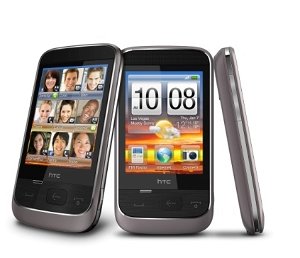
I realise that I am in the fortunate position of owning both an HTC HD2 and a Toshiba TG01, two super specc'd and very speedy Windows Mobile smart phones. More on the Tosh later, as I have now upgraded to 6.5.x and it is working beautifully as my portable media player, synchronizing beautifully with my Windows media centre. Until last week, the HD2 was my actual phone, but, much as I like it, there are a few things which I would prefer to see in it. The first is a longer battery life - with Exchange and Twitter running you are lucky to get through 12 hours of use before a recharge. The second is that, much as I like Swype, the on-screen software inpout panels (SIPs) are much more effective on a resistive screen, and I prefer a harware keyboard anyway. The third is that the HD2, even though it is all screen, is still pretty massive.
I am also someone who is fortunate enough to have 2 SIM cards: one for voice and texts (with minimal data) and one for data alone. So, what was the best way to optimize my devices? Well, it would make sense for me to put the data SIM into the HD2 because with internet connection sharing and the marvellous WiFi router, it would be the easiest for using that connection. I also like that I can take it with me and have its serve independently as a mobile internet device (do people still use the term "MID"?).
The Tosh is still my home browsing device, so that meant I needed a new phone, preferably one with a hardware keyboard, WiFi, HSDPA and also pretty cheap. That's where the Samsung SGH-i600 came in. I manage to snag one on eBay for just under £40. It came announced as SIM-locked to O2, but O2 doesn't really lock their handsets so both the 3 and the Orange SIMs work in it. After doing the basic tests to make sure everything was operational I flashed it from Windows Mobile 5.0 to Windows Mobile 6.1. This is not a particularly difficult procress but definitely requires Windows XP (not Vista or 7) and involves a particular sequence of ROM flashes to allow the progression to higher versions of the OS. Now it has the lovely sliding panels interface and all.
Key programs I've loaded on board in no particular order:
- twikini
- total commander
- windows live
- marketplace
- bing
- google maps
- keep recordin'
- live mesh
- myphone
- opera mini 5 beta
- smart piano
- tcpmp
- tempoperfect
- weather watcher
- wm wifi router
Overall I am pretty pleased with the result. The phone serves mainly as a social networking hub and with push email, twitter (via twikini) and facebook all of my bases are covered. This being an older phone the internet connection is HSDPA version 1, but it is fast enough even for browsing using Opera mini.
One thing I will say is that the normal battery is definitely not enough. You will need to use the extended battery if you want to use any kind of connectivity. Thankfully the phone came with a jewel box shaped charger so you are never without an extra. One work of caution though, for reasons entirely incomprehensible to me, Samsung have cables which either charge your phone, or synchronize it, but not both. So you cannot charge the phone with the USB cable that comes with the phone and must use the included wall plug. For people like me who use a single wall wart USB adapter then plug the variety of USB cables in to allow charging of all the different electrical gizmos this is singularly annoying!
My other criticism is that the processor isn't all that quick (certainly conmpared to the two snapdragon devices), so if you are contemplating watching videos encoded in the native QVGA resolition, then you will ve disappointed. Instead, I reencode everything using Windows Media Encoder into the Pocket PC 220x176 profile. This keeps a decent framerate and image quality, with a small file size.
Overall, I'm pretty happy with this arrangeent; my conclusion is that nothing can beat a hardware keyboard at the end of the day!
19 April 2010
That big ass table
It was with some surprise that I wandered into Delft tourist information to find Microsoft Surface in action there. Never touched one of these before, and it was unoccupied. I am convinced this really is the way of the future!
10 April 2010
Joggler, not iPad
Readers of my blog will realize that the iPad is basically the antithesis of everything I believe in when it comes to gadgetry: a shiny, slick, seductive trinket which is also a closed and proprietary appliance. I'm not saying that this is not right for many people, but for me, with my propensity to tinker and tweak, it is unsatisfying. And the suggestion that any company can decide what I run on my own computer once I've bought it is frankly downright insulting. I can't put it better than Cory Doctorow at Boing Boing, or Peter Bright at Ars Technica, but in short, Apple is doing its hardest to lock people into its own way at the expense of open standards. Bad, bad Apple!This did not, of course, stop me from popping down to the Apple Store by the Licoln Center for a quick fondle, and I must say that it does swoop and swoosh with considerable aplomb, so the device is very appealing from an aesthetic level in terms of both the hardware and software. What really put me off though, in addition to the above, was the zealous fervour of the random member of the public next to me, trying to convince his friend about the wonders of this new device. It was as though he was a paid salesman who was regurgitating that ridiculous video where Jonathan Ives is going on about how "magical" the iPad is. Urk. She, on the other hand, was sensibly asking things like "Where is the keyboard?" and "I have a netbook, why do I need this?" If there is one thing worse than the smugness of Apple, it is the sumugess of its users.
Anyway, exposing myself to new tech makes me itchy to buy something, so I withdrew before I made a regretable mistake, but wasn't quite fast enough. When I got in, I chanced across an advert for the O2 Joggler and how it was going for just £49.99 for a limited time to celebrate the launch of the app store. Now, I remember the Joggler when it first came out: it is a rebranded OpenPeak Open Frame, but O2's customizations and firmware castrated its functionality leaving it as little more than a really expensive photoframe (it originally cost £149.99). Despite this, it really is a great piece of hardware with pretty good specifications including a 7" WVGA capacitive touch screen, WiFi, a built-in speaker and an Atom processor. The hardware alone costs more than £50, so at that price I could't say no.A bit more reading, however, and I have now discovered that O2 have finally released an SDK and a style guide, which bodes well for new funcitonality. They have already added Google Calendar, Google Maps and YouTube. And there are other hackers out there who have managed to install Ubuntu Netbook Remix, Android and even Maemo Mer onto it. The joggler does not ahve batteries, so it may have been more prudent to have waited for a true Android tablet, but it wouldn't have been this cheap. Will give it a bit of a play and see where it goes. Delivery due any time now!
26 March 2010
Replacing the N800
Of course, this means that the TG01 had to be repurposed to this role. But could it live up to the standards of the N800? Well the answer is both a 'yes' and a 'no'. First of all, the TG01 just doesn't have anywhere near the same kinds of speakers of the N800. I don't mind the loss of stereo sound, but I do mind that the Toshiba can't really crank up the volume enough. I don't need it to be too loud, just loud enough to overcome the sound of frying something in the kitchen or splashing about in the tub. The TG01 can't quite achieve this. The other major issue is the lack of a built in stand. I looked on line for a case which has this as part of the design, but they were nowhere to be found. Instead I have taken to using a bit of blutack to stick the stand which came with the TG01, a weird 3-way folding contraption, to the back of the phone. It works but is hardly cosmetic. I guess the best thing is that it works in both landscape and portrait where the N800 could not.
So, what do I use now as my pod catcher? Well, the one I have settled on is BeyondPod, which has two great features. The first is automatic seeking and downloading of podcasts. This means I never have to check manually and all the latest material is there for me to watch when I want. It also has a great automatic delete function, which I have set to remove podcats older than three weeks. This is essential as I have an 8GB card in there which is surprisingly little capacity. I am still sticking to downloading the versions of the podcasts formatted for the PSP as the resolution is fine, but some shows just don't come compressed that way, such as the Engadget Show. There was some trepidation the first time I played this on the TG01 - would the Snapdragon processor hold up? - but it all seems to run fine at the encoded frame rate. Of course the file is totally massive, and, for my purposes, unnecessarily so.
The other amazing program is myPlayer, a great riff on the BBC iPlayer, but which supports most of the U.K.'s on-line TV channels as well as the one from the Beeb. Now, in this case the resolution does matter, as what comes through is blocky and pixelated, and now and then there are limitations to the speed at which it streams. This can lead to the odd glitch in playback.
Finally, the Snapdragon processor really comes into its own when myPlayer is combined with my pair of bluetooth speakers. I have, in the past used an HTC Magician to try to stream audio, and this worked fairly well. The N800 does not have the BT audio profile so could not connect to the external speakers. But the TG01 handles the combined streaming of video into the device via Wifi, decoding and displaying the image on the screen, and transmitting the audio out via bluetooth to the speakers without a hitch. Amazing! To a certain extent it also mitigates the disadvantage of the poor built-in speakers.
27 January 2010
Getting a "sense" of the Toshiba TG01
As you may have gathered, my phone was upgraded, and I am now in posession of a Toshiba TG01. The shocking thing is that this phone is, for whatever reason, not very popular on Orange, and they are in the process of getting rid of them. I was amazed that they gave it to me entirely for free (on a contract, albeit a low one); we are talking about a Windows Mobile 6.5 smart phone with a 4.1" WVGA screen and a Snapdragon processor humming along at 1GHz encased in one of the most gorgeous and thinnest shells I have ever seen. Bargain!Naturally, hardware alone does not a good phone make, and software also plays a very big role. I did try using Toshiba's own stripe interface which wasn't really as bad as people make out, and Orange's customizations which I think are truly dreadful and ugly, as well as Titanium, the default Zune-like interface of WM6.5, but because I have been using the HTC Diamond for so long, I have gotten used to the default HTC interface. I think the Diamond was the first device to use TouchFlo 3D, and with time this has gradually been upgraded and is now called HTC Sense. In fact, my Diamond currently runs HTC Sense 2.1, so I was seriously missing the interface.
Well, the good news is that this being Windows Mobile, if you don't like the UI you can always change it, and one enterprising soul has created a Sense 2.1 cab installer. This runs very well on the TG01 as you might imagine, and is both fast and responsive. You do get all the amazing 3D weather animations which never cease to wow me. Here is a video I made of it in action.
Sadly there are a few tabs which don't really work fully. The first is the contacts tab which, while you are able to assign favourites, on my device and setup crashes when you click on "All Contacts" on the left soft key. Also, video doesn't appear in the pictures and videos tab, nor does the picture viewer open when you click on a photo. HTC Album (HTC's own photo viewer) doesn't seem to install properly on this device. Obviously, and link to an HTC proprietary program is non-functional either.
04 March 2009
Non-mouse mice
Okay, so you have a keyboard and you have a mouse, but neither really seem to be the tools you need for what you do. There are too many clicks, you are moving your pointer too far across the screen. I know how you feel. Actually, until a short time ago I just thought it was something to grin and bear. That is, until I installed my Griffin Powermate.
When I was a kid using an Apple ][ all we had to play with was the keyboard for "real" stuff, and the joystick for games. Graduating to the PC, the keyboard-mouse combo took over and it has pretty much been the way things have been for the last two decades. Then a couple o fyears ago I was given a Powermate for Christmas. It was treated as one of those Christmas presents which you think, oh lovely, I always wanted one, but which actually ends up in the shoebox at the back of the cupboard.
Anyway, I was clearing my stuff out when I chanced upon it and thought, well, now is the time to test it out. The Powermate is a beautiful device: it feels heavy and has a blue LED which pulses organically when it is on. The question is, what does it do? Well, it is a programmable dial and button. So you can program it to do one thing when you press it, another when you dial it in either direction, and another when you do a combination of the two - not actually as easy as it sounds. The function also changes depending on what program you have in focus.It all sounds like it will liberate you completely, but to be honest it hasn't done all that much for me. I use it extensively in Firefox with the dial to scroll up and down a web page, perfect for Google Reader, and the press dial is good for switching tabs. That, essentially, is that. Your mileage may vary.
I was looking at the Powermate though, and thinking it would have so much more functionality of you could squeeze it or use it as a joystick, which is when I had a look at loads of other gadgets which are not mice, but function as accessory input devices. Never even seen any of these in the flesh let along had a chance to play with them, but they may be something to keep an eye on for the future.18 December 2008
Who is the Nokia N800 for?
I bought a Nokia N800. This being Spurious Starlight, we never acquire the latest tech, and the N800 originally came out at the start of 2007. So now the N800 is just shy of 2 years old, and can be had for just shy of £100 eBay. If you've not heard of the Nokia N800 I don't blame you. Nokia is one of those companies who, although they make more than one produce more than one item, are really only well known for their mobile phones. The N800, however, has no cellular radio within it, but in terms of hardware is actually very similar to a phone both in terms of size and components. Instead, Nokia calls it an 'internet tablet' (NIT). Two years ago when the N800 was released, one of the overriding questions was: who is it for? Two years later is the answer any clearer?Going by my past posts, you will gather that what I do on the internet revolves around browsing news, staying in touch with friends and family through Facebook and IM, checking email, listening to podcasts (both audio and video) and listening to internet radio. I would say that those few actions account for 90% of what I do on the net - consumption of media rather than creation. What I've discovered the N800 is, is a device which allows me to do all of that in a pocketable form factor.
Surfing the internet is possible on my phone, and using an HTC Touch Diamond with Opera 9.5 really isn't a bad experience, but with such a tiny screen, even with a high pixel density, you can't avoid a degree of claustrophobia. In contrast, the N800 has a huge screen both in terms of size and resolution. It is WVGA 800x480 which means that you can see most webpages without scrolling side to side, and because it uses a Mozilla-based browser, the rendering is near-identical to what you would see on a desktop. It handles javascript and flash which is really impressive too. Pages render relatively quickly via WiFi, but I will say that certain pages do cause it to choke, especially the 'infinite' pages like Google Reader.
Facebook is a bit of a weird one on the N800. If you just enter the facebook URL you get some kind of weird message. Facebook clearly has never heard of the N800 and assumes that it is a mobile web browser, and tries to divert you to a WAP page. If you put the http://www.facebook.com/login.php specific URL in, however, you can go to the desktop version which is what the N800 excels at. Once you are there you get the full fat version of Facebook with every function known - so much better than the mobile or iphone variants of the site.
Communication via Skype works really well, and you can even use the video camera which pops out of the side of the device. You can also instant message using Gizmo which connects to the Windows Live Messenger service. I don't use the other IM services which are supported so I wouldn't know how they work. My onluy concern is that the built-in keyboards are pretty unfinger friendly. Even the big QWERTY keyboard, which is far better than most on-sceen keyboards I have ever used, takes a bit of getting used to. As a result, typing is just a little bit slower and more frustrating. This goes for emailing too. The email clinet is very easy to set up and inludes imap for GMail which is basically what I live on. Multiple accounts are also posisble, and the client polls the servers regularly, witht he D-pad glowing blue when a new mail comes in. I am not going to discuss media consumption at the moment because I am still exploring the device, But sufficeth to say the built in media player is adequate, but the downloadable player Canola, is amazing!
09 December 2008
A review of the Creative Inspire T10i speakers
Quite a while ago I reappropriated my old HTC Magician as an internet radio. The set up was a bit convoluted, but worked quite well. in the interim, however, the phone was requisitioned by my parents and I went back to listening to my internet radio on the PC. I still think this is a bit of an overkill, and there is something vaguely annoying about having to boot up my desktop to listen to a bit of streaming Christmas music. Time to come up with another solution!While I no longer have the phone, I still do have the SanDisk WiFi SD card and indeed the bluetooth speakers. The bluetooth connection was a bit wasted though, since the only PDA I have lying around at the moment is my old hp iPAQ h2210. This has bluetooth but does not support A2DP. In truth, the Acoutic Energies don't have the best sound anyway, with rather muddy basses and wooly highs. So I figured it was time to look for a new pair of speakers.
In the end I settled on a pair of Creative Inspire T10i speakers. I have had a really good experience with Creative's before and I know that in their price range their speakers really are unparalleled. I originally wanted to get one of the fancy X-Fi speakers since the music playing out of my PDA will have been digitally compressed. Most internet radio streams run at a feeble 96kbps I believe, and it would have been great to have some of that fleshed out using the X-Fi crystallizer system. I'm not going to argue the case for X-Fi, but suffice to say that response to it is a bit subjective - I love it for digital music.
Unfortunately, X-Fi systems come at a price premium and I didn't want to spend more than fifty quid on it. I found one review of the T10is on line and it was really positive, so I figured I would give them a shot. Even so, I was heading rather blindly into the purchase. I ended up spending just under £30 for the speakers on eBay and have to say that for the price the sound really is stunningly good.
The speakers themselves aren't particularly huge but they have a tweeter and a mid-sized cone, as well as a bass port exiting at the top. The right speaker has the volume and tone control knobs, and at the back a power and audio in port. This being the T10 'i' variant, it also came with a dock for an iPhone or iPod Touch - clearly this is something I do not need. As I mentioned, I am streaming internet radio through it at the moment, and the basses are rich and punchy with clean, crisp highs and rounded mids. The sound is really beyond what one would expect for speakers in this price range. Strongly recommended and well worth it: if only because I can now listen to O Come All ye Faithful without first hearing the Windows startup sound!
07 December 2008
Odd phone designs #1
In principle, QWERTY phones need to be long to accomodate the keyboard, so it baffles me just a little that whoever drew up the blueprints decided that this phone also needed a hideaway number pad. Mind you I guess it does make for a sleeker look. The added bonus? Gaming keys because this phone also has a SNES emulator built in!
30 November 2008
A review of the Huawei E160G 3G modem on 3
Work has been exceptionally dictatorial about its internet usage of late, and with the pre-existing ban on the use of Facebook and eBay at work newly supplemented with a log of all the websites one visits, it was enough to tip me over into getting my own mobile broadband access. As you may know from my previous post, I have an MSI Wind which I have been using as my primary on-the-go computing device for a while now. Ironically, however, while it is a netbook, when I take it out of the house I rarely used it to surf the net, mainly because it is quite difficult nowadays to find an open WiFi access point. My new 3G modem has definitely changed all that.I did a quick search on the net and knew that I could get a fairly good deal from 3. At their web shop they are offering 3GB downloads for £15 a month. With a bit of digging though, I signed up for a contract giving me 5GB of downloads a month for £7.50. It is over 18 months though, so I hope it works out! The bonus of a £10 accessories voucher was also appreciated!
I received my dongle on Wednesday. It is a Huawei E160G in black, and rather sleek it is too. I used to carry a USB thumbdrive on my keychain, and this resembles it closely, although it is thicker, longer and wider. I did try to attach it to my keychain but as it kept stabbing me whenever I sat down, I abandoned that idea pretty quickly. The other main complaint is that if it is shaped like something you could put on a keychain, why does it not have a keychain loop? Instead it has one of those tiny little holes which it is even difficult to fit a regular mobile phone lanyard through. Rather bad design on Huawei's part I must say.
Apart from the size and the lack of a decent method of attachment, the modem itself is quite attractive. It has a rubberized outer coating with a 3 logo printed in white at one end. Just behind the logo and underneath a thinner piece of plastic is the status LED which glows through the enclosure. Pretty cool. The dongle itself is three-quarters encircled by a chrome edge in which there are two flaps: one is for an external antenna, while the other accepts a microSD card. I was quite surprised at this as I already carry an 8GB thumbdrive and the fact that this can take on that role is a bit of a bonus. Indeed I put my 8GB microSDHC into the slot and it is definitely SDHC compatible.At the top, under the cap is the USB port and a small tray for the SIM card. The dongle is pretty chunky, and it comes supplied with a USB extension cord so that, if your USB ports are closely spaced, you don't end up blocking two of them. On my MSI Wind I end up plugging the dongle straight into the port on the right, with the left ports being used for my RF portable mouse and the USB thumbdrive. It works out quite well.
Another interesting feature of the dongle is that when you insert it into a PC it mounts as a CD ROM drive and proceeds to install the software. The process is fairly straightforward as it is done through a wizard, but it was slightly annoying that the moment it was loaded, the program told me that an update was available, and it went on line, to get it. This prompted a total uninstall of the original software and a reinstall. Honestly, you'd think it would be trivial to update the modem with the latest software. The microSD reader component mounts as a separate USB drive.
Once everything is up and running, which does take a while, you are confronted with a big orange button you click on to connect. At home I found that I had a 6/10 bar HSDPA connection with a theoretical maximum of 3.6MBps download speed. The modem itself does not support the higher speed HSPA network. In reality, however, and I know that this is contingent on place and time, I was getting measly download speed of only 160kbps, and uploads of 52kbps! Obviously this is sorely disappointing, because it does preclude some of the things you take for granted on the internet like streaming video. That means no YouTube and no iPlayer. I've not read the fine print about whether or not this is permissible anyway under the terms and conditions, but it is clearly not physically possible. Instant messaging is fine and VoIP struggles but does work. No video conferencing though.
So, how do I feel so far? Well, I love the freedom that a wireless modem affords, and I like that 5GB really is more than I need so I don't really have to think about it. It has certainly changed my mobile computing patterns, and I find I am answering more emails, and updating my Facebook profile with greater frequency. My only wish is that I bought a netbook with a modem built into it. While not terribly inconvenient, the dongle does take up one precious USB port and it sticks out a mile! And I live in fear that it will get nicked if I leave it plugged in when I am away from the desk. Overall I am happy with it. Let's see how it develops.
25 July 2008
A quick review of the MSI Wind

The demands I place on my portable devices aren't great. I generally use them for the odd bit of word processing or spreadsheet data entry, and if I am particularly adventurous, might also read emails or surf a bit of the web. That is why until now I have been quite content with my combination of an old handheld PC and an old XP notebook. Then the MSI Wind came along, and it met my needs for a lightweight, relatively powerful and suitably cheap computer, and I rushed out (or actually, logged on) and bought it.
As a portable device the Wind in its Advent 4211 incarnation is a small and light notebook. It feels about the same weight as my MobilePro 900C, and much lighter than my Fujitsu Lifebook P2120. As it happens, the Wind is significantly thinner than the Lifebook (it lacks an optical drive after all) but still deeper than the MobilePro, so the latter still wins on size. However, I never really understood the point of laptops smaller than this because, to me at least, the reduction in usability is not made up for by the gain in portability. After all, unless the computer is the size of a mobile phone you still have to carry a bag to put it into.
The most major advantage of the MobilePro is that it boots instantaneously; it is, after all, running an embedded operating system. In contrast, the Lifebook with its 800MHz Transmeta Crusoe processor used to take nearly five or six minutes to boot up into XP! So my usage patterns of the two devices varied. When I am out and about, but with access to a regular desktop I'd carry the H/PC, but when I was travelling it was the notebook which would go with me.
To be honest, I hardly ever do a cold reboot on my XP systems anyway, preferring to hibernate over shutting down. The Lifebook could just about do it, but a wake up would still take a couple of minutes, so it was still frustrating and nowhere near as convenient as the H/PC. Thankfully, the Wind is running Intel's new Atom processor and has a healthy 1GB of RAM. That means that it does boot up quickly, and it takes a very tolerable 15 seconds to go from hibernate to a useable desktop. The processor and RAM combination means that once you are booted up, there is just so much more you can do.
I like to configure my desktops (one I use for sound/ video editing and website management, and one which I use as an HTPC) with Rocket Dock, Yahoo! Widgets and a Vista-esque skin with transparency, animation and drop shadows. Until now I could never ever dream of doing that with the Lifebook without it being crushed. In contrast, the Wind desktop looks and behaves exactly like my desktop. In itself, this is just eye candy, but it reflects how well the system is able to cope with multitasking and processor intensive activities. Until now, for instance, I would never have been able to reencode a video using Super which simultaneously watching a show on BBC iPlayer on my laptop, but this is handled with aplomb on the Wind.
The main purpose of the MSI Wind is as an internet connected device, and this it handles very well. For one thing, the all-important wireless connections of Bluetooth and WiFi are built-in which means none of the nasty PCMCIA cards/ USB dongles of my former two devices . I’m using Firefox 3, and it handles the Silverlight-based ITV catch up website with no problems at all. Flash videos play as well on the netbook as well as on my HTPC. Better yet, the built-in webcam means that I can Skype/Windows Live Messenger my parents and friends on the other side of the globe wherever I am. This is not, I hasten to add, always a good thing. None of these are things which I could ever do on my MobilePro, and only with great difficulty on my Lifebook. It does not have any GSM/3G technology built-in, but internet connection sharing using my phone is not a problem. This means access to the web is feasible even when I am away from WiFi. I realize that I am making the MSI Wind sound totally wonderful, and there is no doubt that it has almost supplanted the MobilePro 900c and the Lifebook P2120 as my portable device of choice, but it is not all a bed of roses. My first and most major complaint is the battery life. Now I admit that all those wireless radios do suck up the juice, but I would expect more than 2 hours on a screen at half brightness with wireless off. With wireless on I am barely eking out 90 minutes of uptime. On my Lifebook I was probably doing no better, and in fact the productive time was probably less as I waited for the processor to grind through things, but with the 900c I was easily getting four hours and more on a full charge.
Secondly, unlike the Lifebook, there are no hardware quick launch buttons. I have taken for granted the ability to launch Firefox with a single button press, and while launching a program from the dock is not a huge hassle, it is less convenient.
Thirdly, the MSI Wind has a track pad. I am well aware that users fall into two different groups as far as track pads and pointer nipples go, but I am very much a fan of the nipple (oh ho ho!) as it is implemented on the Lifebook. The Lifebook also has the all important third mouse button which enables opening of links in new tab in the web browser. I’ve still not figured how to do this in a convenient way on the Wind. The 900c is even better in that it has a touch screen and, apart from price, it baffles me as to why this was not incorporated into the Wind.
Fourthly, the built-in speakers are very feeble. I can understand that they decided not to put it under the palm rests. This is an annoyance for me on the Lifebook in that you are always covering the speakers with your hands while typing. But the fact that they are on top means that the sound passes through unobstructed and the Lifebook actually doubles up as a pretty good DVD player. There is no optical drive in the MSI Wind, but to be honest, I rarely used it in the Lifebook, and if I really need it I can use a virtual one with Virtual Daemon Manager, or if pushed, use an actual USB external drive.Many reviews I have read on-line go on about how wonderful and spacious the keyboard is on the Wind; it certainly is when compared with the EeePC, its closest competitor, but is about the same size as the keyboard on the Lifebook and the 900c. But size really isn’t everything, and the keyboard on the wind has a very solid feel to it, with very good key travel. I can type without problems on it, and it beats the fragile feel of the Lifebook keyboard hands down. With the Lifebook it feels like you could mistype, jab your fingers under a key and pop it off all too easily.
So, all in all, I think I am really enjoying my new gadget. It has finally supplanted my duo of a Handheld PC and a subnotebook, in a convenient, attractive and inexpensive package. I’m very pleased with it!
09 November 2007
Nokia 6260 review 4 years late! Part 1: hardware
Generally I have difficulty believing in reviews of phones when they first come out, mainly because it is hard to assess just how durable they are in the short term. That said, two of the best reviews of the 6260 came up with a short list of hardware issues, even back then. These include:
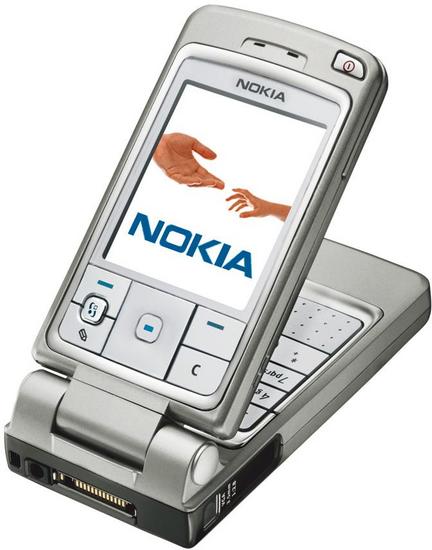
All these are found on my phone, but to be honest are not causing me any problems at all. The camera is black, and the aperture around it is also black, meaning that unless you are a real stickler for perfection, the lack of alignment is barely noticeable. Of course, the fact that I paid around £40 all in for the phone, rather than its original retail proce means that I am less fimicky about things like that. The same goes for the slightly diagonal tilt to the LCD screen in the frame.I can understand why people would be annoyed with the sot keys being located on the upper part of the flip, rather than with the main keypad. It can get somewhat annoying when you are using the phone as a phone as, ergonomically, it presents a bit of a hurdle for your thumb. That said, it also means that the important navigation keys are available to you when you flip the phone into its "tablet" mode, as with most modern slider phones. This is particularly great for me because I don't really intend to use the phone as a phone, but more of a PDA, and I find I am using it more in this conformation than any other.
In fact, this ability to flip into three different positions, as a regular phone, as a tablet and as a camcorder, is one of the appeals of this phone. The mechanics which enables the transformer-like ability is still working well after four years, and the screen rotation and flip are both quite tight still, and the electronics work well. Chalk one up for Nokia build quality! What is great is that if you want to watch a video in landscape mode, it is possible to lie it on its side on the table with the screen slightly rotated upwards for easy viewing. Not many phones which can do that!
What I will say though, is that the rest of the phone has not worn well at all. The plastics used for the phone fascia are pretty durable, but have worn down with time, particularly on the edges where two pices come together. I am willing to give it leeway because this phone is, after all, four years old, but I must also say that i wish there wasn't quite so much plastic all over the phone. In closed clamshell mode you have a vast swathe of plastic on the top, then when open, under the keys is another field of plastic , and of course the back is basically an ocean of the material. This phone is not small, and picking it up, the first thing you do notice is the plasticky-ness of it. It just feels cheap (and it was cheap, but you get the picture).
04 November 2007
Retro gaming on the cheap
My Zodiac in 2007
So, it was a bit of a challenge to my prejudices when I finally got my Zod. If you are not au fait with the history of the Zodiac, it was basically a Palm OS based device built from the ground up as a gaming console. To this end it has a Motorola MX1 ARM9 processor running at 200 MHz, and a separate graphics accelerator, an ATI Imageon W4200 2D with 8 MB dedicated SDRAM. My Zod is a Zodiac 2 with 128MB of RAM. With an HVGA screen and not one but two SD card slots, even by today’s standards, the Tapwave’s innards compare favourably with current hardware configurations. And the exterior, well, it has got to be one of the most beautiful PDAs ever created with its all metal chassis, an analog control stick and wonderfully tactile shoulder buttons.
Unfortunately, Tapwave the company went belly up in 2005, meaning that development for the Zodiac platform (although not for the Palm platform with which it is compatible) crawled to a halt. This is a shame because many of the games which are available specifically for the Zodiac, like Stuntcar Extreme and Spyhunter, are visually stunning and make full use of the hardware and controllers. Although I have loaded up all manner of games for the Zodiac and for Palm, and a number of game emulators as well, and the Zod does brilliantly at all of them, I must admit that I am not much of a portable gamer.
So what do I actually use the Zodiac for? Well, since I purchased a PalmOne WiFi card to go with the Zod, I can actually go on line. I have tried a number of different browsers including Opera Mini and Picsel (what a faff!), but in the end I have settled on the relatively stable and full-screen Web, the Zod’s default browser. It is hardly full functioned in that it can’t support Flash or AJAX, but is perfectly capable of handling Google Reader and any Google formatted website. The main advantage is the large screen, and relatively high resolution, which makes reading off it a whole lot easier. A pity that ClearType is obviously not supported because it would otherwise make for a near-perfect eBook reader.
03 November 2007
Tweedledum or Tweedledee
What this means in practice is not entirely clear to me, but going through the software available out there, installation seems to depend principally on the edition of the OS, and less so on feature packs, as one might expect. There also appears to be a fairly big jump between S60 1st and 2nd Editions and the 3rd Edition, in that software seems to be compatible between the 1st and 2nd, but needs to be rewritten for the 3rd. It also appears that unlike Windows Mobile, third party products have to have some kind of digital signature. While this pretty much guarantees some quality, this tactic also locks tinkerers out of the ecosystem, which is reflected in the relative paucity of third party apps, especially freeware, out there for S60 compared with Windows Mobile and Palm.
So, the decision then comes down to price, and once again, it is interesting to see that the older 6600 fetches nearly the same price as the 6260. I guess the 6600 must have been very popular, because there is a shed load of them on eBay, and they go for just under £40 now. In contrast, the 6260 is a rarer model, and sells for just over £40. It suggests to me that the 6600 is still in much demand. Indeed, accessories for the 6600 abound still, including all manner of fascias and cases. Reviews have also been fairly positive (this is going back some 4 years now) of the 6600, and less so of the 6260.
In the end though, I think I prefer the flip and fold form-factor of the 6260, so it may well be my choice.
27 June 2007
A pox on thee!
I have succumbed to the upgrade bug, but I must admit only partially. As a fan of handheld PCs, I have been looking out for a reasonably cheap HTC Universal for a while. Considering that these juggernauts used to cost an arm and a leg, it is amazing how far prices have fallen in the last 18 months since they came out. That said, they are still pretty cool devices - full keyboard, VGA screen. Most importantly though, there is a huge community out there dedicated to hacking the device, and several builds of Windows Mobile 6 are available.Anyway, the way I see it, my h4350 is a great device for Skype, but it is always running out of memory and cannot run Skype, Messenger and Pocket Internet Explorer at the same time. Another annoyance was that the browsing experience on a QVGA screen is very limited.
So, when I received the HTC Universal, I flashed it with Midget's Windows Mobile 6 ROM (version 7 I think), then set about loading on the replacement programs - Skype, Opera Mini, and Deepfish browser. My early impressions are that the browsing experience, even using PIE is infinitely better, especially in high resolution mode, and the new Messenger with it's voice clip feature is pretty stunning. Skype also runs beautifully and looks great.
All in all I think it was a justifiable purchase, but now I need to find a role for the old iPAQ.
16 June 2007
A solution to the internet radio question
Well, it has been a while since I blogged anything, but I have been pretty busy. Since the last post I inherited a Qtek S110 a.k.a. HTC Magician from a friend who had bought it solely for the purpose of playing bubble breaker. Anyway, she lost interest after a while and I was the glad recipient of her cast off.This obviously set me thinking about how to best use what is essentially a Pocket PC as a dedicated internet radio device. I already had the SanDisk WiFi SD card, so it was simply a question of putting it all together. Here is my recipe!
Take one HTC Magician and upgrade the ROM to the latest 1.13 WWE version. Then run the cab file to upgrade the bluetooth on your device. This enables the A2DP profile which will allow the HTC Magician to connect to a set of bluetooth speakers. I'm using a pair of Orange Acoustic Energy bluetooth speakers which currently costs under £40 from Orange. After that all you need to do is install the SD WiFi card and GSPlayer which allows you to play internet radio streams.
Voila! Internet radio is streamed via WiFi to the Pocket PC, and then via bluetooth from the Pocket PC to a pair of external speakers. The icing on the cake is that the HTC Magician is so small it is like a remote control, and you can carry it around the room to switch channels at will. Who needs a Sideshow remote when you have a Pocket PC eh?
12 March 2007
Stand-alone mp3 player and internet radio
I was busy tapping away in Open Office Writer when my partner came into the room and asked me to play a "Autumn Leaves". I was, of course, recording a TV show at the same time, so even though the combination of these programs didn't totally kill my PC (AMD XP processor, yes, it is old), poor Eva Cassidy had a serious case of the stutters.Of course, the answer is to upgrade the processor, but that, being totally against my philosophy of exhausting antiquated equipment, is out of the question. The alternative is to get a standalone mp3 player. One which certainly looks good is the Logik IR100 internet radio. Not only can it access internet radio stations, it can play mp3 files stored in network folders.
But naturally, my desktop will slow to a crawl if it has to feed an mp3 over a network to another device, which means some form of local storage is necessary. I just checked my music folder and I have over 30GB of music, so that puts most last generation digital audio players out of the equation.
Ideally, I'd like to put all my music on a portable hard drive and plug it into something which has a USB host. It should also have WiFi connectivity for internet radio streaming. At present, after some research, I have decided to with a PDA that has USB-host and WiFi, like the Toshiba e800, or something like a Fujitsu Stylistic LT which can also do both.Watch this space!
07 March 2007
Handheld PCs reborn

At the recent 3GSM conference in Barcelona two interesting phones made the headlines. The first was Nokia’s new E90 smartphone, the natural progression of its own 9000 series phones. The second was iMate’s new Ultimate 7150. To judge by the press coverage of the event it was as though a whole new form factor had suddenly been invented, quite forgetting the fact that clamshell devices, albeit sans phone module, have been around for a very long time.
In my mind, this form factor has always had a special appeal. Quite apart from protecting the screen, it also allows you to have a near full sized keyboard, with keys which actually have some travel. None of those press-and-they-barely-move keys you get with slide-out keyboards.
The very pinnacle of such devices, and I realize that I will no doubt rile the EPOC fanatics out there, were the Handheld PCs. I say ‘were’ because the platform is no longer supported, and has not been for nearly seven years. Like its Pocket PC and Smartphone counterparts, Handheld PC runs on Windows CE. Unlike them though, the native build closely resembles a Windows 95 desktop. With the help of skinning tools you can actually make it resemble any Windows desktop you like, including Vista.I have a Samsung Izzi Pro, a Handheld PC developed at the height of interest in these devices when there were many companies churning them out. There were later, better specced Handheld PCs released subsequently, the Jornada 720 being one of the best, but never again would there be the range of manufacturers or hardware variations. The Izzi Pro has a great swivel and fold form factor which allows it to convert between a traditional laptop and a tablet, and it has a near full size keyboard, which I can type faster on than my more conventional laptop!